In the sprawling digital landscapes of the metaverse, a new form of luxury is rapidly taking root and flourishing: virtual jewelry. These are not mere pixelated trinkets or low-resolution accessories; they are intricate, meticulously designed digital assets that carry significant cultural, social, and increasingly, financial weight. As our lives become more intertwined with virtual spaces—for work, socializing, commerce, and entertainment—the desire to express identity and status within these realms has ignited a booming market for digital adornment. This is not a fleeting trend but a fundamental shift in how we perceive and assign value to objects that exist purely in the computational ether.
The concept of value for virtual jewelry is a complex tapestry woven from several distinct threads, the most revolutionary being blockchain technology and Non-Fungible Tokens (NFTs). An NFT acts as an unforgeable certificate of authenticity and ownership, permanently recorded on a decentralized ledger. This transforms a virtual necklace or a pair of digital earrings from a simple image file that can be copied infinitely into a unique, verifiably scarce asset. This scarcity is the bedrock of its economic value. Much like a physical limited-edition Rolex or a rare diamond, the knowledge that only one or a few specimens of a particular virtual piece exist creates desirability and commands a premium. High-profile auctions have seen these digital items sell for astonishing sums, rivaling and sometimes surpassing their physical counterparts, proving that a robust market is eager to assign real-world monetary value to digital exclusivity.
Yet, to view virtual jewelry's worth solely through a financial lens is to miss its profounder dimensions. Its value is also deeply embedded in utility and identity. In many social virtual platforms and games, these items are more than decoration; they are functional. A specific amulet might grant a character unique abilities in a game, while a particular crown could grant its owner access to an exclusive virtual club or event. This functionality adds a layer of practical value that transcends pure aesthetics. Furthermore, in a world where our avatars serve as our primary representatives, virtual jewelry becomes a powerful tool for self-expression and identity curation. It allows users to signal their affiliations, tastes, and status within a community. Wearing a piece from a renowned digital artist or a coveted collection from a major luxury brand like Gucci or Tiffany & Co., which have already entered the space, becomes a silent language communicating one's place in the digital social hierarchy.
The emotional and community-driven value of these assets cannot be overstated. Owning a piece from a specific collection can signify membership in a particular community or fandom, fostering a sense of belonging among holders. The provenance of a piece—who designed it, which famous avatar owned it previously, or what event it commemorates—adds narrative value, making it a digital heirloom with a story. This emotional connection, this shared history within a community, is a form of value that is intangible yet incredibly potent, mirroring the sentimental value we place on physical family jewelry.
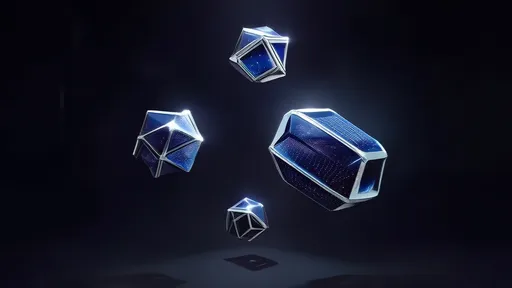
On the creative front, the design process for virtual jewelry is unshackled from the physical constraints that have governed the craft for millennia. Designers are no longer limited by the laws of physics, the availability of materials, or the limitations of manufacturing. Gravity, tensile strength, and cost-prohibitive rare gems become irrelevant. This new liberty has given birth to an avant-garde movement in jewelry design. Artists are creating pieces that would be impossible to render in the physical world: intricate filigree that floats independently around an avatar's form, gems that pulse with an internal light and change color based on the time of day in the virtual world, or elaborate headpieces constructed from animated particles and ethereal energy fields.
The palette for these designers is not gold and diamonds but light, motion, and visual effect. The materials are code and imagination. The focus shifts from carat weight and clarity to how light refracts through a digitally rendered crystal, how a piece animates as an avatar moves, and how it interacts with the virtual environment. Does it cast a unique light? Does it leave a trail of shimmering particles? Can it change form? This dynamic, interactive quality is a fundamental differentiator and a key source of value in virtual jewelry design. The piece is not static; it is a living, breathing part of the avatar's experience.
This new medium also demands a new skillset. Virtual jewelers must be masters of 3D modeling software, understanding topology and mesh geometry to create pieces that are not only beautiful but also optimized to render efficiently across different platforms and devices. They must have a keen eye for animation and visual effects to imbue their creations with life. Furthermore, an understanding of game engines and how assets are integrated into virtual worlds is becoming increasingly important. It's a fusion of traditional artistic sensibility with cutting-edge technical prowess.
The intersection with the established physical luxury industry is one of the most fascinating developments. Legacy houses like Bulgari, Paris, and Breitling are not merely observing; they are actively participating. Their strategy is multi-pronged: it's about brand extension, attracting a new, younger, digitally-native clientele, and creating a new revenue stream. They bring their centuries-old heritage of design excellence, brand storytelling, and an aura of luxury to the metaverse. When someone buys a virtual NFT necklace from a prestigious brand, they are buying a piece of that brand's legacy and status, translated into a new medium. These brands often create digital twins of their physical pieces or design entirely new collections that play to the strengths of the digital realm, thus bridging their physical and virtual identities.
However, this nascent industry does not sail without headwinds. Significant challenges remain. Interoperability—the ability to use a virtual jewelry item across different metaverse platforms, games, and social spaces—is a major technical and commercial hurdle. Currently, an item purchased on one platform is often locked within its ecosystem. The industry is actively seeking standards and solutions to break down these walls, as true portability would exponentially increase the utility and value of digital assets. Furthermore, the environmental impact of some blockchain networks, though improving with the adoption of energy-efficient protocols, remains a concern for a generation that is highly conscious of sustainability. Finally, the market is still defining itself, with questions about long-term value retention, copyright enforcement, and consumer protection still being navigated.
Despite these challenges, the trajectory is clear. Virtual jewelry is evolving from a niche curiosity into a serious pillar of the future digital economy and a vibrant new art form. It represents a paradigm shift in luxury, where value is derived from a blend of digital scarcity, utility, community status, and breathtaking, impossible design. As the technology matures, interoperability improves, and more creators and brands enter the fray, we can expect this market to become more sophisticated, accessible, and integrated into our daily digital lives. The virtual self is becoming as important as the physical self, and just as we adorn our bodies, we will increasingly seek to adorn our avatars with pieces that reflect our identity, wealth, and aspirations in the boundless frontier of the metaverse.
By /Aug 27, 2025

By /Aug 27, 2025
By /Aug 27, 2025
By /Aug 27, 2025
By /Aug 27, 2025
By /Aug 27, 2025

By /Aug 27, 2025

By /Aug 27, 2025
By /Aug 27, 2025

By /Aug 27, 2025
By /Aug 27, 2025
By /Aug 27, 2025
By /Aug 27, 2025
By /Aug 27, 2025

By /Aug 27, 2025
By /Aug 27, 2025
By /Aug 27, 2025

By /Aug 27, 2025
By /Aug 27, 2025
By /Aug 27, 2025