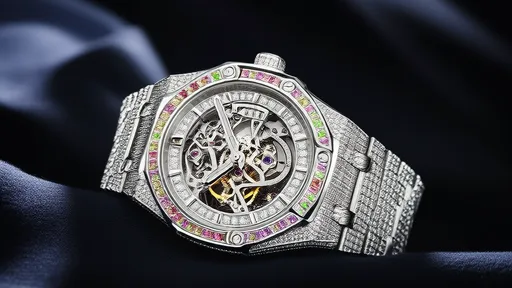
In the rarefied world of haute horlogerie, where mechanical mastery has long reigned supreme, a quiet yet profound revolution is unfolding on the very surface of the timepiece. The art of gem-setting, once considered a secondary decorative craft, has been catapulted to the forefront of innovation, transforming the dials, bezels, and cases of high-end watches into canvases for micro-engineering marvels. This is not merely about adding brilliance; it is a fundamental reimagining of scale, technique, and artistic expression, all confined to a space no larger than a few square centimeters.
The journey begins with a radical shift in perspective. For centuries, gem-setting in watchmaking followed traditional jewellery principles: securing stones into pre-drilled metal to enhance beauty and value. However, the contemporary masters of this craft are no longer just jewellers; they are micro-engineers, optical physicists, and avant-garde artists. Their goal has evolved from simply holding a stone in place to creating seamless, breathtaking patterns of light that appear to float, flow, or defy the very geometry of the watch itself. The challenge is monumental. They operate in a realm where a fraction of a millimeter is a vast chasm, and a dust mote can be a boulder. Every decision—from the selection of stones with perfect dimensional consistency to the design of minuscule settings—is magnified a hundredfold by the tiny scale.
This revolution is powered by an arsenal of sophisticated techniques that push the boundaries of the possible. Invisible setting, a technique pioneered in jewellery, has been miniaturized to an extreme degree. Craftsmen cut grooves mere microns deep into the underside of each baguette-cut gemstone, which then slide onto a hidden rail system made of a proprietary gold alloy. The result is a flawless, continuous surface of gems with no visible metal, creating a mesmerizing tapestry of color and light. The precision required is staggering; each stone must be cut to within tolerances of 5/1000ths of a millimeter to ensure the seamless flow of the pattern.
Another groundbreaking technique taking the industry by storm is snow setting. Unlike the orderly grids of pave, snow setting aims to replicate the random, organic sparkle of freshly fallen snow. The setter must have an artist's eye to arrange hundreds of differently sized diamonds in a seemingly chaotic yet perfectly balanced composition. There is no template, no grid to follow. It is a feat of freehand mastery, ensuring each stone is perfectly angled for maximum brilliance while the precious metal claws that hold them are rendered nearly invisible. The effect is a dial that appears to be carved from a single, shimmering block of ice.
Perhaps the most technically audacious innovation is the development of flexible gem-setting. Imagine a bracelet or a dial segment entirely covered in gems, but one that remains supple and comfortable on the wrist. Engineers and setters have developed revolutionary systems where tiny gem-set gold links or plates are interconnected with hinges or flexible substrates thinner than a human hair. This allows the rigid beauty of a fully gem-covered surface to move with the fluidity of fabric. The development of such systems involves solving complex problems of structural integrity, ensuring stones do not come loose with movement, and maintaining a perfectly uniform appearance even when flexed.
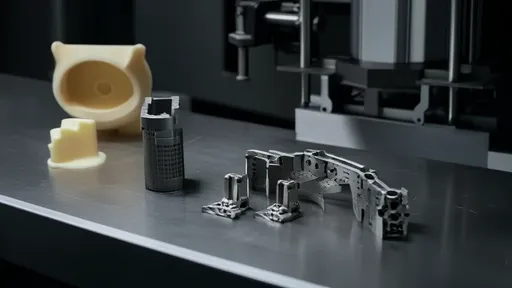
The tools of the trade have undergone a parallel evolution. While the dexterous hands of the sertisseur (setter) remain irreplaceable, they are now augmented by technology once confined to aerospace labs. High-precision 5-axis CNC machines mill setting beds out of solid gold with microscopic accuracy. Lasers are used to weld setting claws without thermal damage to the surrounding metal or gems. Scanning electron microscopes are employed to inspect the finished work, checking for imperfections invisible to the naked eye. This synergy between human artistry and robotic precision is what allows for the creation of designs that were pure fantasy a generation ago.
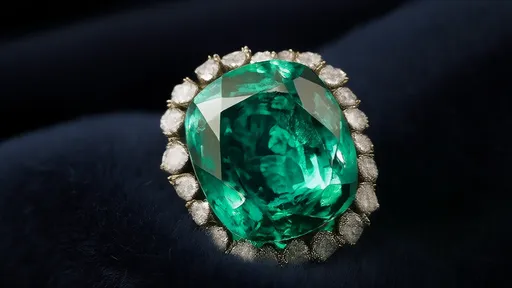
The choice of materials has also expanded far beyond the classic diamond. Watchmakers are now exploring the entire spectrum of precious and rare gems to add narrative and color. Intensely blue Paraiba tourmaline, fiery red rubellite, deep green tsavorite, and enigmatic black diamonds are selected not just for their value, but for their ability to tell a story—a starry night sky, volcanic earth, or deep ocean. Furthermore, the treatment of these materials has become more advanced. Gems are now often cut into unconventional shapes—sharp triangles, tiny stars, delicate ribbons—to fit specific artistic visions, requiring entirely new setting methods to be invented for a single, unique timepiece.
This micro-engineering revolution transcends aesthetics; it is deeply intertwined with the watch's identity and value. A superbly executed gem-setting elevates a timepiece from a instrument of timekeeping to a wearable masterpiece. It represents countless hours of painstaking labor, a significant portion of which is done under microscopes by artisans with decades of experience. The value is not just in the carat weight of the gems, but in the immense, intangible investment of skill, innovation, and time itself—the very essence of watchmaking. It is a bold statement that in the 21st century, luxury is defined not by opulence alone, but by the execution of the impossible.
Looking toward the horizon, the fusion of technology and art promises even more breathtaking possibilities. We are beginning to see the integration of luminescent materials beneath gem-set surfaces, creating dials that glow with an ethereal light. Research into new composite materials and nano-engineering could lead to settings that are truly invisible to the eye or that actively interact with light in dynamic ways. The future of gem-setting in watchmaking is not just about placing stones more securely or densely; it is about choreographing light itself on the miniature stage of the wrist. This relentless pursuit of perfection in the smallest of details continues to redefine the limits of what a watch can be, ensuring that this ancient craft remains at the cutting edge of modern luxury.

By /Aug 27, 2025

By /Aug 27, 2025

By /Aug 27, 2025

By /Aug 27, 2025
By /Aug 27, 2025

By /Aug 27, 2025

By /Aug 27, 2025

By /Aug 27, 2025
By /Aug 27, 2025

By /Aug 27, 2025

By /Aug 27, 2025
By /Aug 27, 2025

By /Aug 27, 2025

By /Aug 27, 2025

By /Aug 27, 2025

By /Aug 27, 2025
By /Aug 27, 2025

By /Aug 27, 2025
By /Aug 27, 2025

By /Aug 27, 2025