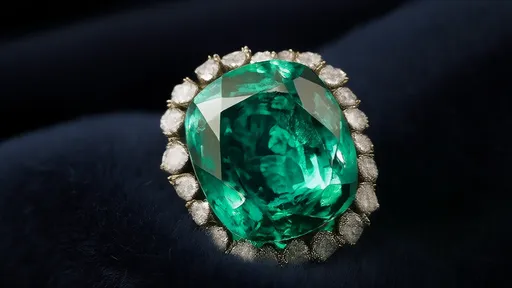
In the world of gemstones, few topics stir as much intrigue and debate as the treatment of emeralds with oils and resins. For centuries, this practice has been both a closely guarded secret and an open acknowledgment within the gem trade, shaping the very essence of how we perceive, value, and care for these captivating green treasures. The journey of emerald enhancement is a tale woven with history, science, commerce, and artistry, reflecting humanity's enduring quest to perfect nature's imperfections while honoring its raw beauty.
The story begins in the ancient mines of Egypt and India, where emeralds were first prized by pharaohs and maharajas. Even then, it was discovered that these gems, renowned for their vivid hue, were inherently fragile and often riddled with internal fractures reaching the surface. Early lapidaries observed that immersing emeralds in natural oils—often cedarwood oil—made these flaws less visible, allowing the stone's color to shine with uninterrupted brilliance. This was not seen as deception but as an artisanal technique to reveal the emerald's true potential, a tradition passed down through generations long before gemological laboratories existed to certify such practices.
As the gem trade evolved into a global industry, so did the methods of treatment. The mid-20th century brought significant advancements, with the introduction of synthetic resins and polymers. Unlike natural oils, which could dry out or discolor over time, these modern substances offered greater stability and durability. Today, the vast majority of emeralds on the market undergo some form of clarity enhancement, a fact widely accepted by dealers, jewelers, and collectors alike. The goal remains unchanged: to stabilize the gem and improve its appearance without altering its fundamental identity. Gemological institutes now grade these treatments on a scale from "none" to "significant," providing transparency and empowering buyers to make informed decisions.
However, the use of oils and resins is not without controversy. Purists argue that any treatment diminishes the stone's inherent value, preferring untouched, natural emeralds despite their rarity and often higher price tags. Others contend that enhancement is a practical necessity, given that virtually all emeralds contain inclusions and fractures—referred to as jardin, French for garden—due to their turbulent geological formation. This dichotomy has sparked ongoing discussions about ethics, disclosure, and the very definition of authenticity in the gem world.
Beyond the debates lies a critical aspect often overlooked by owners: the care and maintenance of treated emeralds. These stones are more sensitive than their untreated counterparts, requiring mindful handling to preserve their beauty and integrity. Exposure to heat, ultrasonic cleaners, or harsh chemicals can cause the filling substances to break down, leading to whitening or the reappearance of fractures. Even everyday activities like applying perfume, washing hands with soap, or prolonged sunlight can pose risks. The vulnerability of treated emeralds underscores the importance of understanding their unique nature.
To safeguard these gems, experts recommend gentle cleaning with lukewarm water, a soft brush, and mild detergent, followed by careful drying with a lint-free cloth. It is also advisable to store emerald jewelry separately to prevent scratches from harder stones like diamonds or sapphires. Periodic check-ups with a reputable jeweler can help assess the condition of the treatment and determine if re-oiling is necessary—a service commonly offered to maintain the stone's luster over time. Ultimately, caring for an emerald is not just about preservation; it is about respecting the delicate balance between human intervention and natural wonder.
The narrative of emerald treatment is far from static. Research continues into more stable and eco-friendly filling materials, while laser technology and nanotechnology promise even less invasive methods in the future. Yet, the core philosophy endures: to enhance, not erase, the character of each stone. As consumers become more educated and demand greater transparency, the industry is gradually shifting toward full disclosure, fostering a culture where the story behind the gem is as valued as the gem itself.
In the end, the legacy of oiling emeralds is a testament to our relationship with nature's creations—a blend of reverence and resourcefulness. It reminds us that beauty often lies in imperfection, and that sometimes, a little help is needed to let it shine. Whether adorned in a royal crown or a modern engagement ring, the emerald continues to captivate, its lush green depths holding secrets of the earth and the hands that polished it to perfection.

By /Aug 27, 2025

By /Aug 27, 2025

By /Aug 27, 2025

By /Aug 27, 2025

By /Aug 27, 2025

By /Aug 27, 2025

By /Aug 27, 2025

By /Aug 27, 2025
By /Aug 27, 2025

By /Aug 27, 2025

By /Aug 27, 2025

By /Aug 27, 2025

By /Aug 27, 2025
By /Aug 27, 2025

By /Aug 27, 2025

By /Aug 27, 2025

By /Aug 27, 2025

By /Aug 27, 2025

By /Aug 27, 2025

By /Aug 27, 2025