The shimmer of light catching a perfectly cut diamond. The subtle texture of brushed gold against skin. The way a pair of glasses sits just so on the bridge of a nose. For years, Augmented Reality (AR) try-on technology has promised to bring these tactile, intimate experiences of shopping for wearables into the digital realm. While early iterations successfully conquered the foundational challenge of shape and fit—allowing users to see if a watch was too large or glasses too wide—they often fell into what developers call the "uncanny valley" of retail. The object was there, but it felt flat, lifeless, and patently digital, lacking the crucial elements that drive emotional connection and, ultimately, purchase decisions: realistic material properties and dynamic light interaction. The next great leap in AR try-on is not about placing an object in space, but about breathing life into it, moving from a convincing shape to a believable, lustrous presence.
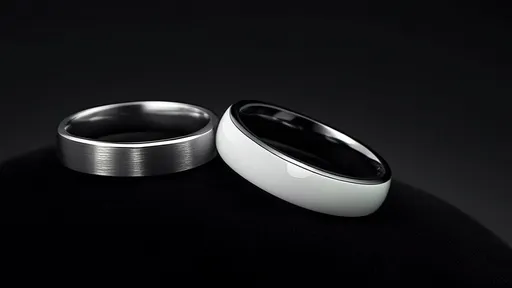
The journey to this point has been largely geometric. Pioneering companies dedicated immense resources to solving the complex puzzle of spatial mapping and facial/body tracking. Using advanced algorithms and device sensors, they learned to anchor digital objects to a user's environment or anatomy with impressive stability. This solved the functional question of "Does it fit?" but left the more nuanced aesthetic questions unanswered. A platinum ring and a silver ring might have the same 3D model, but in the real world, they are unmistakably different. One carries a cool, sharp sheen; the other a softer, warmer glow. This discrepancy between geometric accuracy and material inaccuracy became the primary barrier to consumer trust. How can you buy a piece of fine jewelry online if the AR version looks like dull, gray plastic?
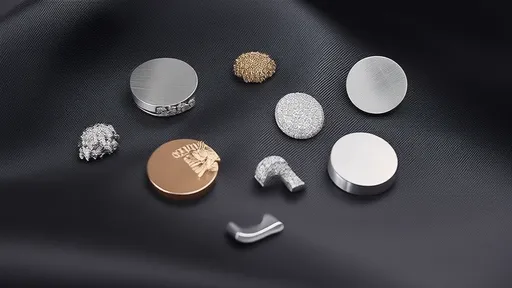
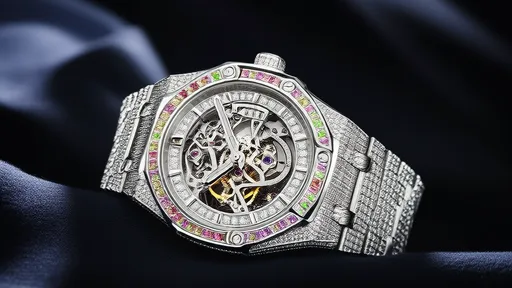
This is where the frontier of AR try-on now lies, and the key to crossing it is a sophisticated fusion of physics-based rendering (PBR) and real-time environmental understanding. PBR is not a new concept in high-end computer graphics for films and games; it is a method of shading and rendering that aims to simulate the actual flow of light. Instead of using simple textures, PBR materials are defined by a set of scientific parameters that describe how a surface interacts with light. These include properties like albedo (base color), metallicness, roughness, and specular reflection. A perfectly smooth surface like a polished gemstone has low roughness and high specular reflection, causing sharp, bright highlights. A brushed metal surface has higher roughness, scattering light to create a softer, matte appearance.
However, for AR, PBR cannot operate in a vacuum. Its magic is only unleashed when it can interact with the user's actual environment. This requires the AR system to do more than just map the geometry of a room; it must become a "light reader." The next generation of frameworks are incorporating capabilities to dynamically analyze the ambient light conditions through the device's camera. They detect the color temperature of the light (is it the warm yellow of incandescent bulbs or the cool blue of daylight?), its intensity, and crucially, the direction of primary light sources. This real-time environmental lighting data is then fed directly into the PBR shaders that render the virtual object.
The result is nothing short of transformative. Imagine trying on a virtual diamond ring. The AR application recognizes you are sitting by a sunlit window. It detects the direction of the sunlight and its high intensity. The PBR material for the diamond calculates how that specific light would refract and reflect within its precise cut, generating brilliant flashes of rainbow-colored fire and bright, sharp highlights on its facets. You then move your hand to a darker corner of the room. The system detects the change, and the diamond's appearance softens, its fire subdued but still present, now reflecting the softer, ambient light of the room's lamps. The ring is no longer a static image; it is a dynamic object that lives and reacts in your world.
This pursuit of realism is pushing innovation in other areas as well. For textiles and fabrics, like trying on virtual clothing or sneakers, the challenge moves beyond shine to texture and drape. Here, advanced cloth simulation algorithms are being integrated. These simulations calculate how a specific material—be it stiff denim, flowing silk, or knitted wool—would fold, crease, and move with your body. Coupled with PBR that accurately represents the weave of the fabric and how light catches its threads, the digital garment begins to behave and look astonishingly real. You can see the subtle grain of leather on a virtual watch strap or the intricate knit pattern of a sweater, all responding to your movements and environment.
The implications for industries like eyewear, jewelry, watches, and apparel are profound. For consumers, it erodes the final remnants of hesitation that come with online shopping. The ability to not just see, but to experience how a product looks under different lighting conditions—in your office, at a restaurant, outdoors—provides a depth of information that was previously exclusive to physical stores. It bridges the sensory gap. For retailers, this technology drastically reduces the likelihood of returns due to "the product looking different in person," which is a massive cost center in e-commerce. It enhances consumer confidence and, by extension, conversion rates.
Of course, this technological marvel comes with significant computational demands. Rendering complex PBR materials and running real-time environment light analysis requires substantial processing power. While high-end smartphones are increasingly capable, the industry is working on optimizing these processes and potentially offloading some of the heavier computations to the cloud. The goal is to make this hyper-realistic AR accessible and seamless for the average user on their existing device, without draining their battery or requiring minutes to load.
The evolution of AR try-on from shape to gloss represents a fundamental shift from a tool of utility to a platform for emotional engagement. It’s the difference between seeing a statistic and feeling an experience. We are moving past the era where AR was a neat gimmick and entering a time where it becomes an indispensable, trusted part of the consumer journey. The digital replica is finally becoming a true representation, not just in form, but in soul—capturing the very light and life that makes a product desirable. The future of shopping isn't just about seeing it on; it's about believing it's already yours.
By /Aug 27, 2025

By /Aug 27, 2025
By /Aug 27, 2025
By /Aug 27, 2025
By /Aug 27, 2025
By /Aug 27, 2025
By /Aug 27, 2025

By /Aug 27, 2025

By /Aug 27, 2025

By /Aug 27, 2025

By /Aug 27, 2025

By /Aug 27, 2025
By /Aug 27, 2025

By /Aug 27, 2025

By /Aug 27, 2025

By /Aug 27, 2025
By /Aug 27, 2025

By /Aug 27, 2025
By /Aug 27, 2025

By /Aug 27, 2025