The intersection of traditional Persian carpet motifs and modern suiting might seem unlikely at first glance, but a closer examination reveals a fascinating dialogue between two seemingly disparate worlds. The intricate patterns of Persian rugs, with their rich history and symbolic depth, have quietly infiltrated the realm of bespoke tailoring, particularly in the often-overlooked canvas of suit linings. This unexpected marriage of East and West, tradition and modernity, has given rise to a subtle yet profound revolution in menswear aesthetics.
The Language of Patterns
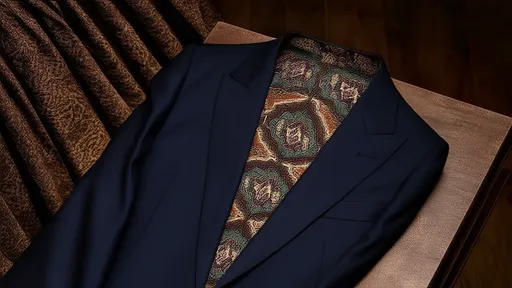
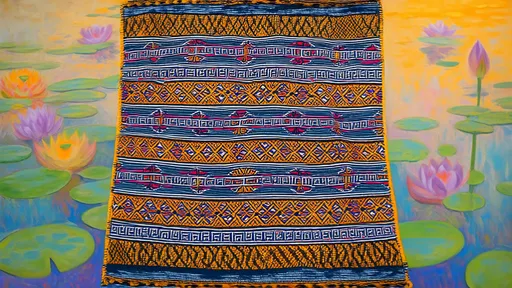
Persian carpets speak in a visual vocabulary developed over centuries, where every curl of a vine and every geometric repetition carries meaning. The islimi (floral arabesque) patterns, with their rhythmic flow, translate remarkably well to the structured confines of a suit's interior. Tailors working with these motifs face the unique challenge of maintaining the pattern's integrity while accommodating the garment's movement and drape. The result is a hidden masterpiece - a lining that reveals itself only in flashes when the jacket is unbuttoned or removed, much like the private viewing of a treasured carpet in a home's inner sanctum.
Contemporary designers have begun treating the suit lining not merely as functional infrastructure but as a canvas for artistic expression. The boteh (paisley) motif, perhaps Persia's most recognizable export to Western design, appears in lining fabrics with renewed sophistication. Unlike the bold paisley patterns of 1960s neckties, these interpretations maintain the motif's delicate balance between density and negative space, creating visual interest without overwhelming the garment's silhouette.
Color Alchemy
The traditional dye palette of Persian carpets - deep madder reds, indigo blues, and saffron yellows - undergoes a transformation when adapted for suit linings. Where carpets might boldly juxtapose these hues, lining treatments employ more subdued tones while preserving the color relationships. A lining might feature a midnight blue version of a pattern originally rendered in cobalt, or a burgundy interpretation of what was once scarlet. This chromatic translation maintains the visual impact while respecting the suit's formal context.
Some avant-garde tailors have begun experimenting with lining designs that mirror specific regional carpet styles. A Tabriz-inspired lining might feature intricate central medallions that align with the wearer's back, while a Kashan-derived pattern could emphasize the graceful elongation of the jacket's silhouette. The most daring interpretations incorporate the subtle imperfections of hand-knotted carpets into their printed linings, celebrating the human touch in an era of machine perfection.
Structural Parallels
The craftsmanship parallels between fine carpet weaving and bespoke tailoring run deeper than surface patterns. Both disciplines share an obsession with material quality, structural integrity, and the relationship between foundation and decoration. A well-constructed suit lining, like a carpet's warp and weft, provides invisible support that allows the visible surface to shine. Some tailors have even begun incorporating textural elements into their linings, using embroidery or quilting techniques that echo the tactile variety found in pile carpets.
The movement of these patterns on a living body introduces an element absent in static carpets - kinetic dimension. As the wearer moves, the lining's patterns shift and reveal themselves in unexpected ways, creating what some designers call "wearable animation." This dynamic quality has led to innovative pattern engineering, with some motifs specifically designed to create optical effects when in motion, much like the intricate moiré patterns seen in certain silk carpets.
Cultural Conversations
This trend speaks to a broader cultural moment where traditional crafts find new relevance through contemporary applications. The Persian carpet's journey from floor to fashion reflects our evolving relationship with cultural artifacts - no longer confined to their original contexts but reinterpreted through modern lenses. For the discerning wearer, these linings offer more than visual pleasure; they carry narratives of cross-cultural exchange and artisanal continuity.
Some tailoring houses have taken the concept further by collaborating directly with carpet designers, creating limited-edition lining fabrics that maintain the spirit of Persian patterns while adapting to sartorial requirements. These collaborations often result in hybrid designs that reference traditional motifs but incorporate tailoring-specific elements like directional patterns that follow the garment's seams or scaled-down repeats that suit the lining's smaller canvas.
The Future of Hidden Details
As menswear continues its trajectory toward personalization and meaning-rich design, the potential for Persian-inspired linings appears limitless. Emerging technologies like digital textile printing allow for unprecedented pattern complexity and color fidelity, enabling reproductions of carpet details that would have been impossible in earlier eras. Yet the most compelling interpretations remain those that don't simply copy carpet designs but thoughtfully adapt them to their new context.
The next frontier may lie in smart linings that change appearance based on temperature or light, creating interactive versions of traditional patterns. Other designers experiment with lining patterns that tell specific stories or map particular carpet-weaving traditions across a suit's interior geography. What remains constant is the appreciation for Persian design's timeless beauty and its surprising relevance to contemporary tailoring's quest for depth and distinction.
Ultimately, the Persian carpet's influence on suit linings represents more than a passing trend. It signifies fashion's growing appreciation for craft traditions and the desire to infuse even hidden garment elements with significance. For the modern gentleman who values both heritage and innovation, these linings offer a secret language of style - one that whispers rather than shouts, rewarding those who appreciate the beauty of details meant to be discovered rather than displayed.

By /Aug 1, 2025
By /Aug 1, 2025
By /Aug 1, 2025
By /Aug 1, 2025
By /Aug 1, 2025
By /Aug 1, 2025
By /Aug 1, 2025

By /Aug 1, 2025
By /Aug 1, 2025
By /Aug 1, 2025

By /Aug 1, 2025
By /Aug 1, 2025
By /Aug 1, 2025
By /Aug 1, 2025

By /Aug 1, 2025
By /Aug 1, 2025
By /Aug 1, 2025

By /Aug 1, 2025
By /Aug 1, 2025
By /Aug 1, 2025